
The 49th parallel represents more than a geopolitical boundary. In the world of B2B sales, it functions as a structural divide between two distinct sets of mechanical laws. On one side, the United States operates on a high-velocity, metric-heavy engine where speed is the primary indicator of system health. On the other, Canada functions within a trust-based ecosystem where relationship capital is the critical lubricant for any transaction.
For the Revenue Architect, navigating this divide is not a matter of “soft skills” or cultural sensitivity. It is a matter of re-engineering the revenue machine to accommodate different atmospheric pressures. Attempting to run a high-volume US-style prospecting sequence in the Canadian market often leads to system rejection. Conversely, trying to scale a trust-based Canadian relationship model in the high-frequency US market results in a catastrophic loss of velocity.
To achieve predictable growth across North America, one must stop viewing sales as a series of “heroic” individual efforts and start viewing it as a Revenue System.
The US Model: The Combustion Engine of Speed and Metrics
The American B2B landscape is characterized by its scale and its demand for efficiency. In this environment, the revenue system is treated as a high-performance combustion engine. The input is data; the output is Precision Pipeline Generation.
In the US, the “Trust Tax” is paid upfront through social proof and immediate value demonstration. If your system cannot articulate a clear ROI or a competitive advantage within the first thirty seconds of an interaction, the system stalls. The American buyer operates under a “prove it and move” mandate. This necessitates a Revenue Architecture built for high-volume throughput and rigorous KPI monitoring.
However, many organizations suffer from structural defects in this model. They over-index on activity: calls made, emails sent, LinkedIn touches logged: without assessing the quality of the mechanical connections. This leads to what we call the “Sales Heroics” trap, where companies rely on exceptional individuals to overcome a broken, noisy system.

The Canadian Model: The Flywheel of Relationship and Trust
The Canadian revenue system operates at a different frequency. Here, trust is not a byproduct of the transaction; it is the prerequisite for it. The Canadian market is smaller, more interconnected, and significantly more risk-averse.
In this ecosystem, the revenue system functions like a flywheel. It takes more energy to start, and the initial rotations are slow. The “Trust Tax” is paid through time, consistency, and the slow accumulation of relationship capital. If a Revenue Architect attempts to force the flywheel to spin at US speeds using automated, high-frequency tactics, the friction generated will destroy the components.
The Canadian buyer asks: “Who are you, who do we both know, and can I trust you to be here in three years?” Only after these diagnostic questions are cleared does the conversation shift to metrics and ROI.
The Mechanical Failure of Misalignment
The most common failure we observe at Atlantic Growth Solutions occurs when a company attempts to port a revenue system from one jurisdiction to another without structural modification.
1. The “Brute Force” Failure
A Canadian firm enters the US market using their traditional relationship-building approach. They find that their outreach is ignored. The system lacks the necessary velocity to penetrate the noise of the US market. Because they lack the infrastructure for Precision Pipeline Generation, they cannot generate the volume required to find the “early adopters” who drive US growth.
2. The “Automated Noise” Failure
A US firm enters the Canadian market with a high-cadence automation strategy. In the Canadian context, this is often perceived as aggressive or “spammy.” The trust-based receptors of the Canadian buyer reject the outreach immediately. The brand equity is damaged before a single conversation occurs. The system has failed because it ignored the fundamental requirement of the Canadian environment: the need for a human-centric, high-trust entry point.
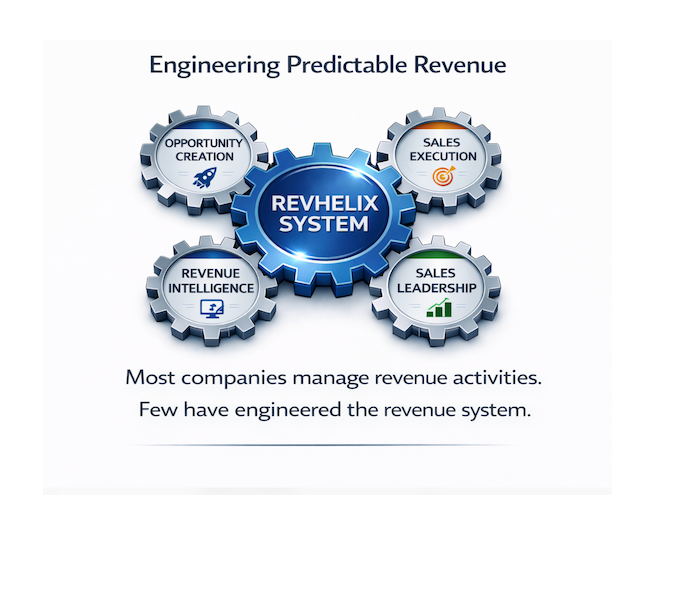
Revenue Architecture: Bridging the Divide with The Revenue System Framework
Solving this divide requires a shift from “managing sales” to “engineering revenue.” At Atlantic Growth Solutions, we deploy The Revenue System Framework to act as the Revenue System Operator. We treat revenue as a machine that must be calibrated to the specific physics of the target market.
The Revenue System Framework does not rely on the “Superhero Trap.” Instead, it integrates AI-driven execution tools with high-level human judgment. This is particularly critical when navigating the North American divide.
Land: Establishing the Base
In the US, “Landing” requires high-velocity Revenue System Operator execution: identifying the right data sets and deploying Precision Pipeline Generation to find immediate friction points in the prospect’s business. In Canada, “Landing” requires a more surgical approach, using Sandler Sales Training principles to establish an Up-Front Contract. We define the parameters of the relationship early to build trust without sacrificing progress.
Expand: Increasing System Velocity
Once the initial connection is made, the Revenue Architect must increase the “speed of trust.” In both markets, we utilize the Sandler BAT Triangle (Behavior, Attitude, Technique) to ensure the revenue machine is operating at peak efficiency. We replace “hope-based” forecasting with diagnostic reporting that quantifies the health of the pipeline.
Consolidate: Solidifying the Revenue Stream
Consolidation is where the Canadian and US models converge. Regardless of the market, a sustainable revenue system must be predictable. This is where Revenue Engineering beats sales heroics. By documenting the processes, automating the repetitive tasks, and reserving human expertise for strategic constraints, we create a system that can operate across borders without breaking.
The Role of the Revenue System Operator
A CEO or VP of Sales should not be an “accidental architect.” They should be a Revenue System Operator. Their job is not to motivate the “heroes” to work harder; it is to ensure the machine is designed to handle the load.
When we engage with a client, our first step is diagnostic. We look for structural defects:
- Is the system failing because of a lack of volume (US failure)?
- Is the system failing because of a lack of trust (Canadian failure)?
- Is the technology stack (AI/Automation) being used as a silver bullet rather than an execution tool?
We often find that companies are trying to solve a structural engineering problem with a cultural solution. You cannot “culture” your way out of a broken pipeline. You must re-architect the system.

Sandler Principles as a Universal Translator
While the speed and trust requirements differ, the underlying mechanics of human decision-making remain consistent. This is why we rely on Sandler Atlantic frameworks. Principles like the Negative Reverse are essential in both markets.
In the US, a Negative Reverse can help disqualify a lead quickly, saving the system from wasting resources on “no-fliers.” In Canada, a Negative Reverse can be used to build trust by demonstrating that you are more interested in a “right-fit” solution than a quick sale. It signals that you are a professional, not a peddler.
Precision Pipeline Generation: Tech-Enabled Human Expertise
The modern Revenue Architect understands that AI and automation are not replacements for human mastery; they are multipliers. In our Revenue System Framework, we use technology to handle the high-volume requirements of the US market while maintaining the personalized, high-trust touchpoints necessary for the Canadian market.
We do not believe in “appointment setting” as a standalone, disconnected activity. We believe in engineering a pipeline that is qualified, predictable, and aligned with the company’s broader Revenue Architecture.

Diagnostic Conclusion: Where is Your System Failing?
If your expansion into the US is stalling, or if your Canadian sales cycles are becoming interminable, the problem is likely structural. You are trying to run a machine in an environment it wasn’t designed for.
The divide between speed and trust is not a gap to be leaped; it is a variable to be accounted for in your Revenue Architecture. Stop looking for “sales superstars” to bridge the gap. Start looking for a system that can handle the physics of the market.
Are you ready to stop the heroics and start engineering? Contact us today to begin a diagnostic assessment of your North American revenue system.
About the Author: Mark Haines-Lacey is the CEO of Atlantic Growth Solutions and a lead Revenue Architect. He focuses on helping B2B companies transition from erratic sales efforts to engineered revenue systems that scale across the North American divide.