
The B2B revenue engine is often treated like a black box. Leadership pours capital into the top, expects “growth” at the bottom, and expresses shock when the gears grind to a halt. When scaling fails, the knee-jerk reaction is usually a call to “increase activity.” This is a diagnostic error.
Most companies believe they have a “lead generation” problem. They don’t. They have a structural defect in their revenue system. They go to market looking for “appointment setting”: a commodity service that prioritizes volume over velocity: when what they actually require is Precision Pipeline Generation.
This report will deconstruct the mechanical differences between high-volume appointment setting and systemic opportunity creation. If your forecast is consistently missing, your pipeline is likely clogged with the wrong type of “activity.”
The Land Phase: Diagnosing the Appointment Setting Trap
In the “Land” phase of building a sales territory, speed is often confused with progress. This is where most B2B companies turn to traditional appointment setting firms.
Names like Martal Group, The Sales Factory, DMT Business Development, and Purple Sales dominate the search results for “B2B Appointment Setting.” These organizations operate on a high-volume, activity-first model. They are effectively “dialing for dollars.” They promise a specific number of meetings per month, and for a scaling company desperate for traction, this looks like a solution.
It isn’t. It is a temporary patch on a leaking pipe.
The Structural Flaw of Volume
The fundamental metric of the appointment setting model is the “booked meeting.” However, a meeting is not an opportunity. In a clinical sense, an appointment is merely a calendar entry. It does not account for:
- ICP Alignment: Does the prospect actually have the structural need for your solution?
- Decision-Making Authority: Are you talking to a researcher or a budget holder?
- Revenue Intent: Is there a quantified cost of inaction for the prospect?
When you outsource to high-volume shops like Martal Group or Purple Sales, you are hiring a specialized labor force to perform repetitive tasks. While they are efficient at generating “leads,” they are disconnected from your actual revenue system. They don’t diagnose your market; they simply spray it with messaging.
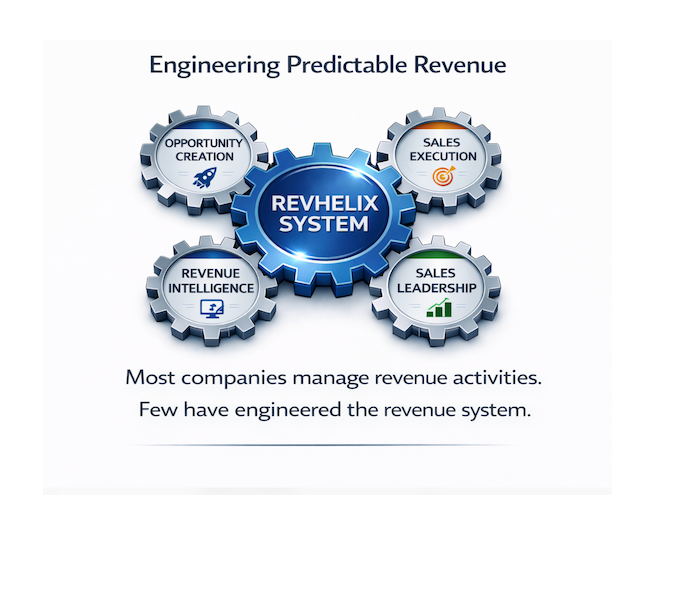
The Expand Phase: Precision Pipeline Generation
To scale effectively, a company must move beyond the “heroic” efforts of a few SDRs and transition into Revenue Engineering. This is the difference between hoping for a meeting and architecting an opportunity.
At Atlantic Growth Solutions, we view “Lead Generation” not as a standalone task, but as a component of the Sales Health Assessment. While competitors like DMT Business Development focus on the front-end activity, we focus on the friction within the system.
Opportunity Creation vs. Appointment Setting
Opportunity creation is a surgical process. It requires a deep understanding of the prospect’s “Pain”: a core Sandler Sales Training principle.
An appointment setter says: “I got you a 15-minute demo with a Director at a Mid-Market firm.”
A Revenue Engineer says: “I have identified a structural failure in this prospect’s supply chain that is costing them $20k per month. They have agreed to an Up-Front Contract to explore our solution as a direct intervention.”
One is a placeholder. The other is a qualified sales-ready opportunity.
For companies scaling in the Canadian B2B landscape, the “volume” approach of firms like The Sales Factory often leads to “Sales Burnout.” Your expensive AEs spend 40% of their time chasing “ghosts”: leads that never show up or have no budget: because the appointment setting firm was incentivized only by the meeting count, not the closed-won revenue.

The Consolidate Phase: Integrating the Revenue System
A revenue system is only as strong as its weakest constraint. If your lead generation is working but your sales execution is failing, you are wasting capital. If your sales team is talented but they are fed “garbage” appointments, your retention will plummet.
To consolidate your market position, you must integrate Precision Pipeline Generation with human-led strategic judgment.
Why High-Volume Models Fail
Companies like DMT Business Development or Purple Sales provide the “muscle,” but they often lack the “brain” of a true GTM strategy. Scaling requires more than just dials; it requires Market Intelligence.
If you do not know why a prospect is buying, you cannot replicate the success. High-volume appointment setting is a “black box” that produces inconsistent results. Precision Pipeline Generation is a “glass box”: every stage is measured, every objection is documented, and every “No” is used to refine the targeting parameters of the system.
The Role of Sandler Principles in Opportunity Creation
True opportunity creation utilizes the BAT Triangle (Behavior, Attitude, Technique).
- Behavior: Consistent, systematic prospecting activity.
- Attitude: Treating the prospect as an equal, not a target.
- Technique: Using Negative Reverses and Up-Front Contracts to ensure the meeting has value for both parties.
When you compare “B2B Appointment Setting” services, ask yourself if their “SDRs” are trained in these methodologies. Most are not. They are coached to push for the “Yes” at all costs, which creates a “soft” pipeline that evaporates during the discovery phase.

Comparing the Models: A Diagnostic Matrix
If you are evaluating Atlantic Growth Solutions against high-volume firms like Martal Group or The Sales Factory, use this checklist to identify where your system is broken.
| Feature | High-Volume Appointment Setting | Precision Pipeline Generation (AGS) |
|---|---|---|
| Primary Metric | Number of Meetings Booked | Quality of Sales-Ready Opportunities |
| Focus | Outbound Volume | Revenue Architecture & System Health |
| Targeting | Broad Lists / Generic Filters | Data-Driven ICP & “Pain” Identification |
| Methodology | Scripted Persuasion | Sandler Sales Principles |
| Feedback Loop | Minimal (Activity Reports) | Sales Health Assessment |
| Tech Stack | Automation-First (Spam Risk) | Human-Led / Tech-Enabled (Strategic) |

The Surgeon’s Conclusion: Stop Buying Meetings
Scaling a B2B company in the current economic climate requires surgical precision. The “heroics” of the past: where a charismatic founder or a high-energy sales team could overcome a broken system: are over.
If you continue to treat lead generation as a commodity “appointment setting” task, you will continue to see a fragmented pipeline. You will continue to see your AEs frustrated by “unqualified” meetings. You will continue to miss your forecasts.
Atlantic Growth Solutions does not offer a “service.” We offer a Revenue System Assessment and the engineering required to fix it. We don’t just “set appointments.” We eliminate the friction that prevents your revenue engine from reaching its maximum output.
If your current “Lead Gen” provider is delivering numbers but not revenue, your system is failing. It’s time to stop looking for a “vendor” and start looking for a Revenue Architect.
Next Steps for the Revenue Leader:
- Audit your “Appointments”: What percentage of meetings from the last 90 days actually entered the “Discovery” phase with a qualified budget?
- Evaluate the Constraint: Is the problem the number of leads, or the quality of the opportunities being created?
- Perform a Diagnostic: Before hiring another high-volume firm like Purple Sales or DMT, understand the structural health of your sales process.
Contact our diagnostic team to begin your Sales Health Assessment. The pipeline doesn’t need more “activity”; it needs better engineering.